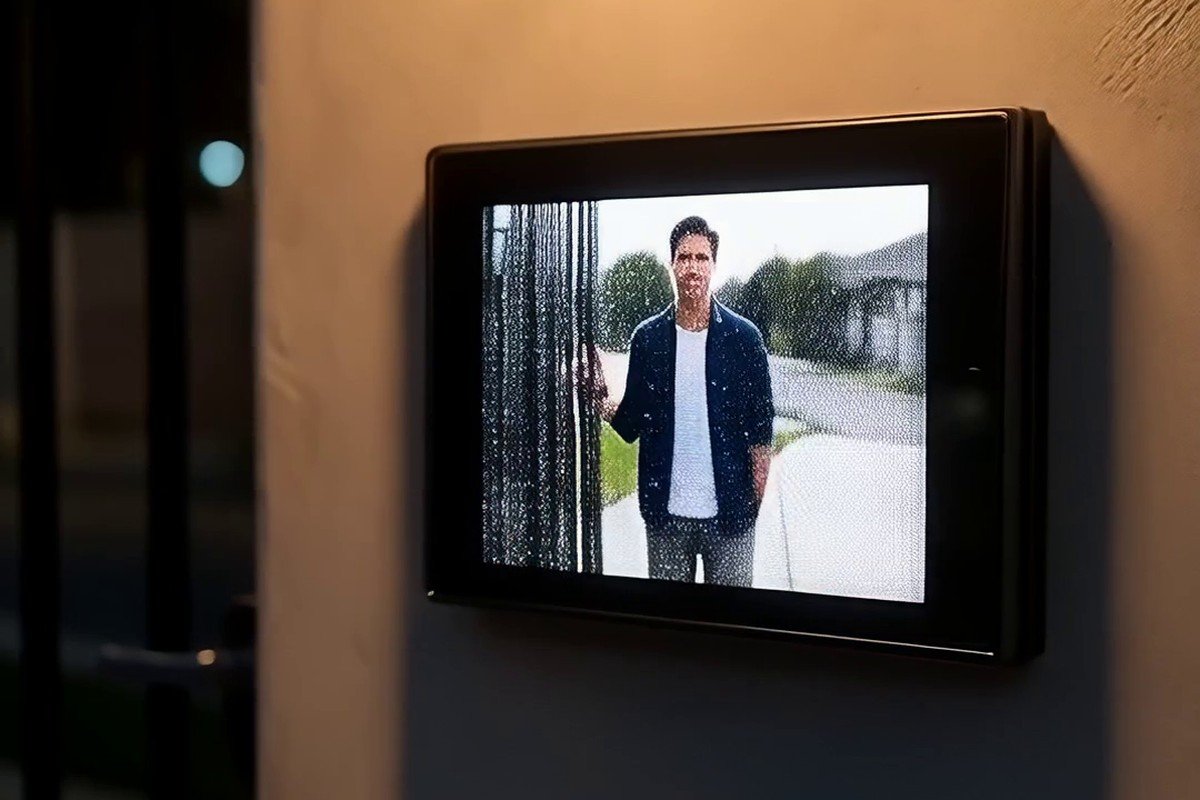
A video intercom system for homes does something a camera alone can’t: it lets you see and talk to whoever is at your gate or door before you decide to open it. For a lot of LA homeowners, especially those with a front gate, a long driveway, or a guest house, that ability to screen visitors is the whole point. Having installed intercoms across Los Angeles since 2015, we’ve seen which setups people love and which ones they regret, and almost every regret traces back to a planning decision made before the hardware was chosen. Here’s how to get that part right.
By the OnBoard IT Tech team, a licensed LA installer (CA #1039864). Serving Los Angeles since 2015.
Intercom versus a doorbell camera
People often assume a doorbell camera and a video intercom are the same thing. They overlap, but they’re built for different jobs. A doorbell camera is great at the front door: it records, it notifies your phone, and it lets you speak to someone standing right there. A video intercom is built around controlled entry, it’s designed to work at a gate or main entrance, often ties into unlocking that gate or door, and can include a dedicated indoor screen so anyone at home can answer without hunting for a phone.
If your main goal is seeing who’s at the front step, a doorbell camera may be enough. If you have a gate, a driveway, multiple buildings, or you simply want a permanent in-home answer point, an intercom is usually the better fit. Our intercom system for home page shows the styles we install most.
Wired versus wireless
As with cameras, an intercom can be wired or wireless, and the trade-offs are similar. A wired intercom, the low-voltage cabling we specialize in, gives you a dependable connection and constant power, which matters a lot for something sitting at your gate through every LA season. It takes more planning to route the cabling cleanly, especially across a longer driveway, but it’s the option that tends to “just work” for years.
Wireless intercoms are quicker to install and can be the practical choice where running cable to a gate is genuinely difficult. The trade-offs are the usual ones: reliance on a good wireless signal reaching the gate, and, for some units, batteries to maintain. For a main gate you’ll use every day, we usually lean wired; for a secondary spot, wireless can be perfectly reasonable.
Single door or a whole property
Think about every point where you’d want to answer or grant entry. A simple system covers one door with one indoor answer point. A larger property might want a station at the street gate and the front door, with screens in more than one room, or a link to your phone so you can answer from anywhere. Homes with a guest house, an ADU, or a home office often benefit from more than one indoor station.
Deciding this before installation matters because adding stations later can mean more cabling and more disruption than doing it up front. It’s worth mapping how you actually move through your home and where you’d realistically want to answer the gate.
How a video intercom system fits your home security
An intercom is strongest as part of a plan rather than a standalone gadget. Positioned well, the intercom’s camera adds a clear view of everyone who approaches your entry, complementing the cameras covering the rest of the property. Many homeowners plan the intercom and camera coverage together so there are no blind spots at the most important point, the place people actually come in. If you’re thinking about the broader camera picture too, our installer for security cameras page explains how we plan coverage so the pieces work together.
Wiring, gates, and staying in scope
Intercom work is low-voltage, which is what we’re licensed to do. Where a job involves the gate’s electric operator or any line-voltage electrical work, we bring in a licensed electrician rather than doing that part ourselves, that keeps everything safe and to code. When you compare quotes, ask each installer to spell out exactly what’s included and who handles the electrical side, because a clear answer there tells you a lot about how the whole job will go.
Getting a system that fits your home
Because gate distance, building layout, and how many answer points you want all vary so much, an intercom is one of those projects where a quick look at the property is worth more than any online estimate. We offer a free on-site assessment: we walk your entry points, talk through how you want to screen and admit visitors, and give you one honest quote. We’re licensed and insured, and we’ve served Los Angeles since 2015, so the same team plans, installs, and supports the system.
Frequently asked questions
Do I need an intercom if I already have a doorbell camera? Not always. If your only goal is the front step, a doorbell camera may cover it. An intercom makes more sense when you have a gate or driveway, want a permanent indoor answer point, or want entry tied to the system.
Wired or wireless for a front gate? For a gate you use daily, wired is usually the more dependable choice because power and connection stay constant. Wireless is a reasonable option where cabling to the gate is impractical.
Can I have screens in more than one room? Yes. Multi-station setups are common, and you can often add phone access as well. It’s best to plan the number and location of stations before installation to avoid extra cabling later.
How do I get a quote for my home? Call 818-564-3496 or request a free on-site assessment. We’ll look at your gate and entry points and give you one honest quote for a system that fits.