By the OnBoard IT Tech team, a licensed LA installer (CA #1039864). Serving Los Angeles since 2015.
If you own a home in Calabasas, you already know the neighborhood comes with its own set of expectations: gated communities, long driveways, guest houses, and properties where you want to know exactly who is coming and going. Access control installation is one of the most practical upgrades a homeowner can make here, whether you are managing a single front gate or coordinating entry across a main house, ADU, and garage.
This guide walks through what access control actually means for a residential property, what to think about before you install one, and how to choose a system that fits your home instead of fighting it. We will keep things specific and skip the vague promises.
What Access Control Actually Means for a Calabasas Home
Access control is simply a way to manage who can open a door, gate, or entry point, and when. Instead of handing out physical keys that get lost or copied, you assign credentials (a key fob, a code, a mobile app, or a card) that can be added or removed at any time.
For Calabasas properties specifically, this usually covers a mix of:
- Pedestrian gates and vehicle gates
- Front doors and side entries
- Garage and workshop doors
- Guest houses, pool houses, or casitas
- Gated community shared entries (coordinated with HOA rules, where applicable)
Because many Calabasas homes sit on larger lots with multiple structures, access control tends to do more work here than it would in a typical city condo. One system can tie together a front gate, a front door, and a detached garage, all managed from a single app or keypad.
Planning Before You Install
A good access control installation in Calabasas starts with a walk-through, not a shopping list. Before any equipment goes in, it helps to think through a few questions:
How many entry points actually need control? Not every door needs a reader. Most homeowners focus on the main gate, the front door, and maybe a garage or side gate, then leave interior doors alone.
Who needs access, and how often does that list change? Families with regular house cleaners, landscapers, dog walkers, or contractors benefit the most from access control, because credentials can be issued and revoked without rekeying anything.
Is there existing wiring in place? Older Calabasas properties sometimes have outdated or incomplete low-voltage wiring, especially around gates that were added or moved over the years. This affects how straightforward the install will be and whether any cable runs need to be added.
Do you want it tied into cameras or an intercom? A lot of homeowners pair access control with a video intercom at the gate, so you can see and talk to a visitor before buzzing them in. This is a natural combination and worth planning for at the same time, even if you install it in phases.
Thinking through these points before the install day keeps the project focused and avoids paying for equipment or labor you do not actually need.
Choosing the Right Type of Access Control
There is no single “best” system. The right choice depends on your property layout and how you want to manage access day to day.
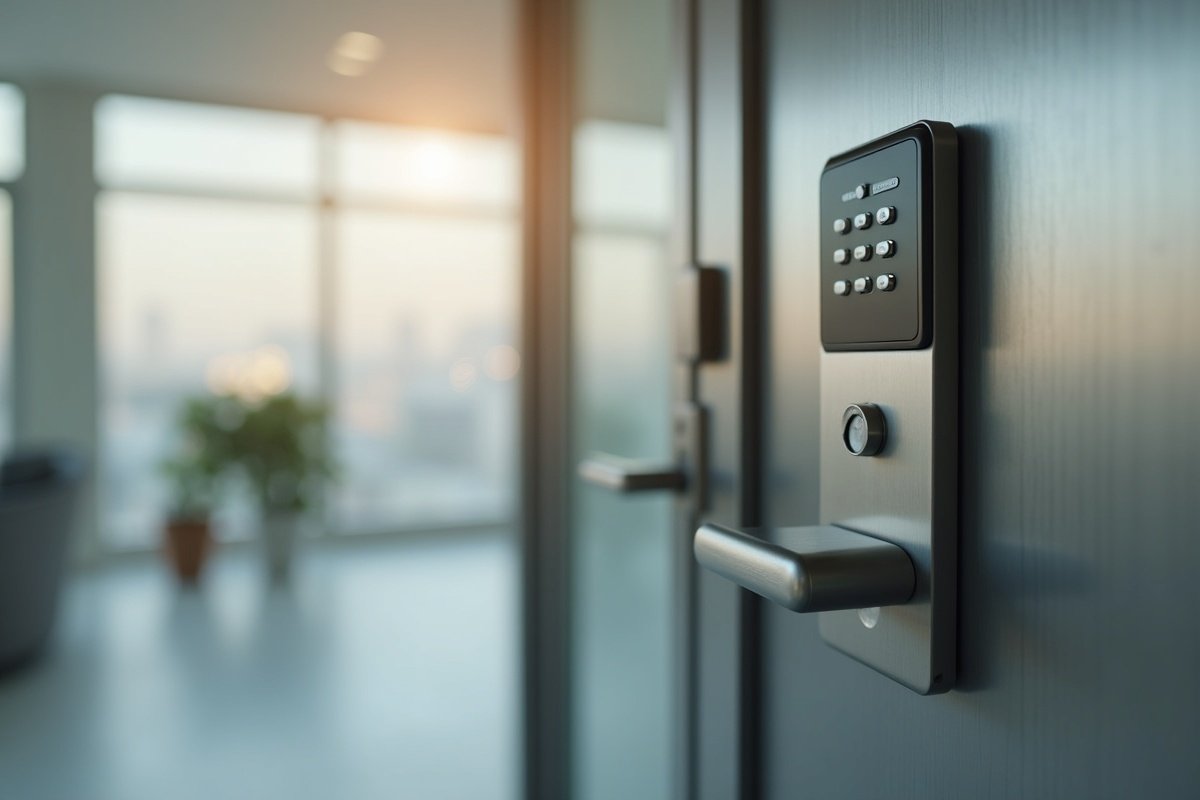
Keypad entry is simple and reliable for gates and garages. You assign a code, and you can change it whenever you want. No app required, which some homeowners prefer.
Key fob or card readers work well for daily users like family members, since there is no code to remember. These are common at front doors and garage entries.
Mobile credential systems let you unlock doors or gates from a smartphone and, in most cases, see a log of who came and went and when. This is popular for Calabasas homeowners who travel often or manage property remotely.
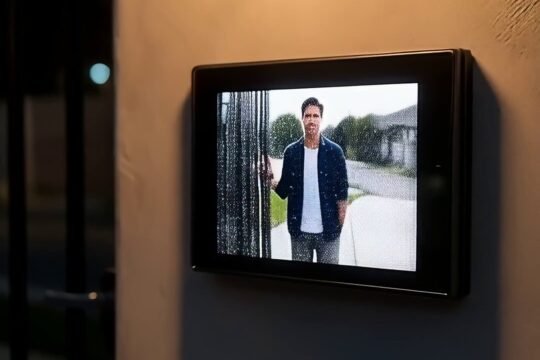
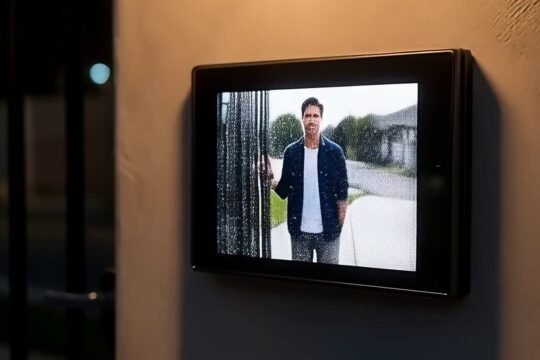
Video intercom with access control combines a camera, two-way audio, and entry control at one point, usually the main gate or front door. You see who is there, talk to them, and let them in from your phone or a wall-mounted panel.
Many homes end up using a combination: a keypad at the vehicle gate, a video intercom at the front door, and a key fob reader at a side entrance used by family. A proper access control installation plan accounts for how each entry point is actually used, not just what looks impressive on paper.
What the Installation Process Looks Like
A straightforward access control installation in Calabasas generally follows this sequence:
- On-site assessment. We look at your entry points, existing wiring, and how you want the system to function, then put together a plan.
- Low-voltage wiring. Cabling is run to each access point as needed. This is low-voltage work only. If a project requires any line-voltage electrical work, such as running new power to a gate operator, that portion is handled by a licensed electrician, not by our team.
- Hardware mounting. Readers, keypads, intercom panels, and controllers are installed at each point.
- Programming and credential setup. Codes, fobs, or mobile credentials are configured, along with any schedules or user permissions you want.
- Testing and walk-through. Every entry point is tested, and we walk you through how to add or remove users, check activity logs, and handle day-to-day use.
Timelines vary depending on how many entry points are involved and whether new cable runs are needed, so it is worth getting a free quote rather than guessing at a number up front.
Common Calabasas Scenarios We See
Gated single-family homes. The vehicle gate and pedestrian gate are usually the priority, often paired with a video intercom so you can screen visitors before opening up.
Properties with a guest house or ADU. Separate access credentials let guests or renters come and go without needing a key to the main house, and you can revoke access easily when needed.
Multi-generational households. Different family members often want different access levels. Access control lets you manage this without juggling multiple physical keys.
Properties inside a gated community. Here, access control usually focuses on the home itself, since the community entry is managed separately. We coordinate the home-side system so it works smoothly alongside community procedures.
Why Professional Installation Matters
Access control systems are only as good as their installation. A reader mounted in the wrong spot, wiring that was run without a plan, or a system that was never properly configured can leave you with gaps instead of peace of mind.
Working with a licensed low-voltage installer means the wiring is done correctly, the equipment is placed where it will actually hold up to Calabasas weather and daily use, and the system is configured the way you actually want to use it, not just the default settings. It also means you have someone to call if you want to add an entry point later or expand the system to a new structure on your property.
Frequently Asked Questions
Do I need a permit for access control installation in Calabasas? Permit requirements depend on the scope of the project and whether any gate operators or structural changes are involved. We can walk you through what applies to your specific property during the assessment.
Can access control work with my existing gate or garage door? In many cases, yes. We evaluate the existing hardware and wiring during the site visit to determine whether it can be integrated or whether some components need to be updated.
Will this involve any electrical work? Our installation covers the low-voltage side of the system (wiring, readers, keypads, and controllers). If a project needs any line-voltage electrical work, such as new power run to a gate motor, that part is handled by a licensed electrician.
How long does a typical installation take? It depends on the number of entry points and whether new wiring needs to be run. We provide a time estimate as part of your free on-site assessment once we have seen the property.
Ready to Get Started?
If you are considering access control installation in Calabasas, the best next step is a straightforward, no-pressure on-site assessment. We will look at your property, talk through your priorities, and put together a plan that actually fits how you live.
Call OnBoard IT Tech at (818) 564-3496 or request a free on-site assessment to get started.